


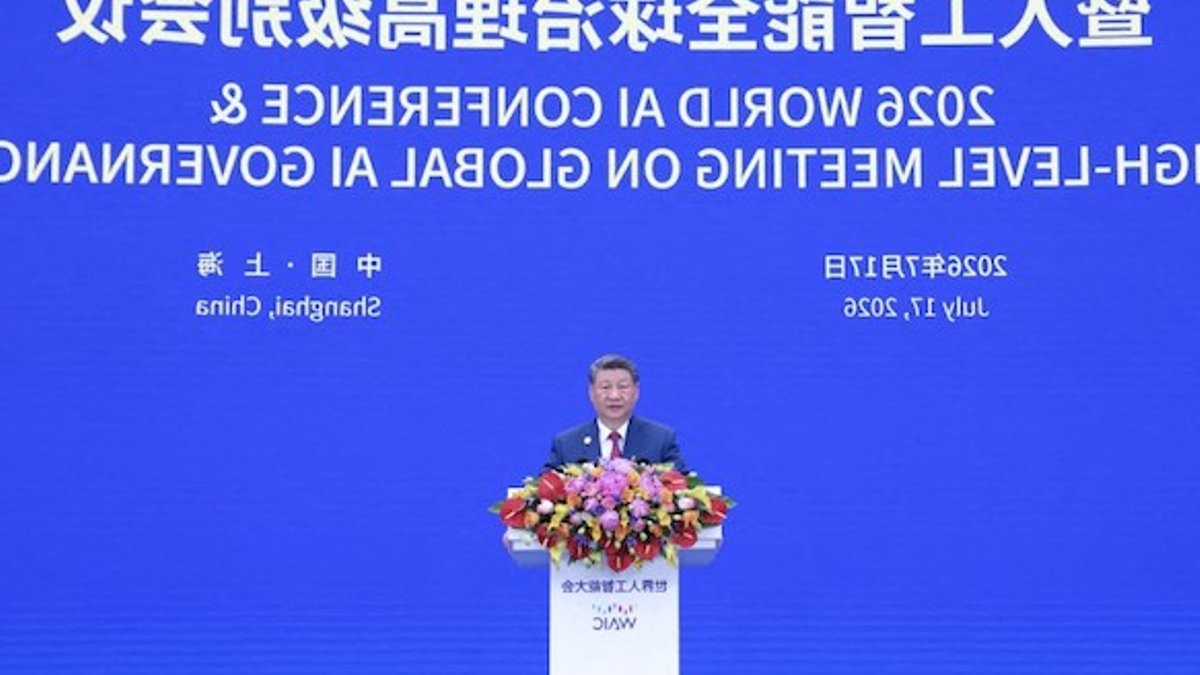
Chinese President Xi Jinping called for global cooperation to regulate artificial intelligence, warning against domination by any single nation. He spoke at the World AI Conference in Shanghai, presenting AI development as a collective effort rather than a national competition.
“AI development should not be a solo performance by a single country, but a symphony of international cooperation,” he stated.
China pushes for shared AI governance
Xi’s comments followed growing global adoption of Chinese AI models, which provide lower costs and open-source alternatives to U.S. systems like those from OpenAI and Anthropic. These developments have raised concerns about military applications, cybersecurity risks, and potential misuse by hackers or extremist groups.
“We should jointly oppose overstretching the national security concept in the field of AI or placing one country’s security over that of others,” he continued. His appeal for regulation reflects broader unease about unchecked AI progress, with some experts drawing parallels to the governance of nuclear power.
Related: Trump Tariffs Threaten $9.7 Billion Indian Drug Exports
The event attracted over 1,000 tech firms and researchers, showcasing China’s latest advancements. Among them was a new flagship model from Beijing-based startup Moonshot AI. State media reported that daily AI usage in the country—measured in tokens—has increased a thousandfold in the past two years.
The push for global cooperation faces obstacles. The U.S. and European Union have restricted tech exports to China, citing security risks. Meanwhile, tensions between Washington and American AI labs have fueled debates over control of advanced technologies.
China advanced its vision of shared governance by launching the World Artificial Intelligence Cooperation Organization. The group, based in Shanghai, includes 29 countries such as Russia, Pakistan, and Indonesia but excludes Western nations. Officials stated the initiative aims to ensure AI develops in a “healthy and orderly” manner.
Some analysts view the move as an effort to counter Western-led AI frameworks. “Europe already has its own AI act, and the United States is defining its regulations,” said Shengyun Lu, an AI entrepreneur and founder of Shanghai consultancy Praxis Advisory. “A single global approach to AI governance seems unlikely.”
Related: EU fines AliExpress $603 million over illegal goods
AI as a tool—and a risk
The conference displayed both the potential and dangers of AI. Exhibits included semiconductor systems and a smartphone capable of autonomously operating apps. Governance remained a central theme, with Xi proposing a “people-centric” approach involving laws, monitoring, and emergency protocols to maintain human control.
New York University professor Arun Sundararajan noted “small glimmers of recent cooperation between Presidents Xi and Trump” but warned that aligning global standards would be challenging due to competing national priorities.
As AI transforms industries, the battle over regulatory control may become as significant as the technology itself.


