


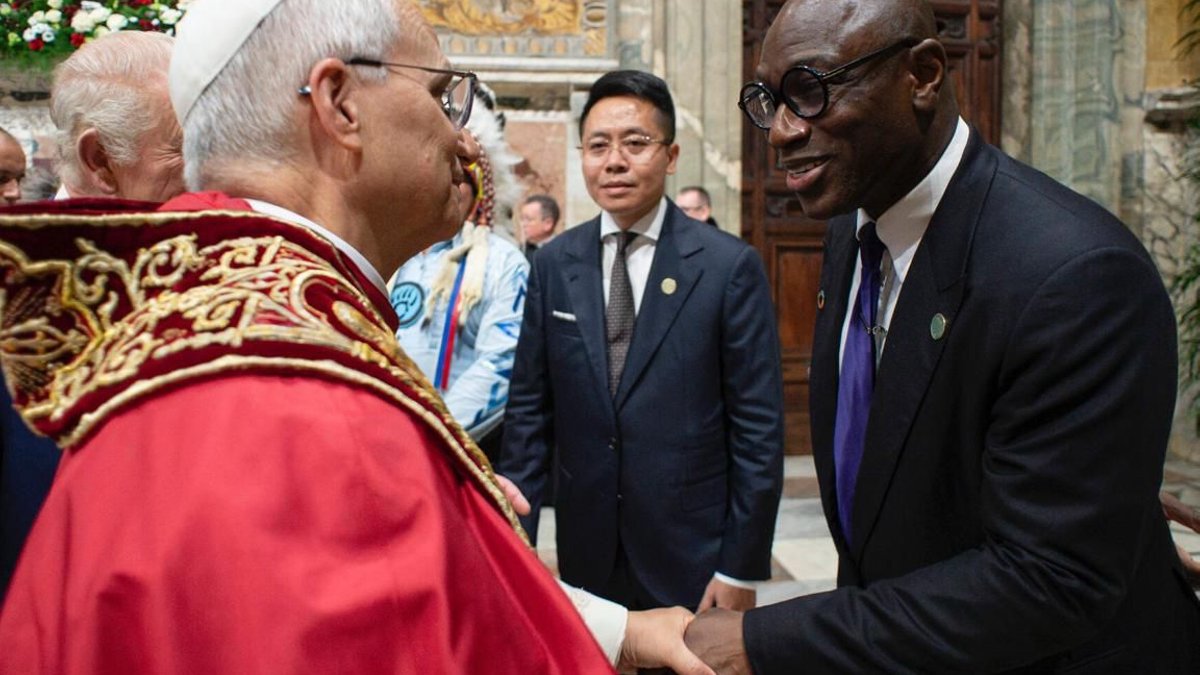
Pope Leo XIV’s recent visit to Africa signals the continent’s rising role in the global economy and the systems through which capital is allocated at scale, according to Africa investor. The organization welcomed the historic trip, noting that global shocks continue to reinforce Africa’s centrality to the systems underpinning the $10 trillion global green industrial transition. The continent is increasingly integral to the energy, critical minerals, food, and digital systems shaping that transition.
With standardisation, pricing visibility and benchmark eligibility established, sovereign infrastructure assets enter institutional allocation systems as a distinct asset class. The shift reinforces the role of Institutional Investor–Public Partnerships (IIPPs) as the execution architecture through which development becomes investable and compatible with the $300 trillion global institutional market. These partnerships are establishing themselves as a foundational pillar of the global financial architecture, central to advancing the private capital mobilisation reform agenda at scale.
The IIPP Architecture, launched for the World Bank Spring Meetings by Africa investor, the Sustainable Markets Initiative and the Institute of Sovereign Investors, aligns sovereign priorities with institutional mandates. This allows capital to allocate through rule-based platforms rather than relying on ad-hoc interventions. It effectively converts development projects into allocatable institutional exposure.
Industrial-scale investment in Africa is increasingly a global systems requirement, not a regional proposition. The alignment of sovereign goals with the rigid mandates of institutional investors creates a pathway for large-scale funding to flow toward projects that might otherwise struggle to attract private capital. This approach addresses the disconnect between development needs and the availability of investable opportunities.
Dr. Hubert Danso, Chairman and CEO of Africa investor, noted the significance of the Pope’s visit in the context of these structural changes. He said, “This visit recognises something structural. Africa is no longer peripheral to global growth. It is becoming integral to how the global economy functions. Capital does not need to be mobilised. It needs to be enabled as allocatable institutional exposure.”
The organization argues that faith can affirm dignity, while markets can scale dignity. Dr. Danso added, “This moment coincides with a structural shift — from development as narrative to development as investable institutional exposure.”
IIPPs function by bridging the gap between public development goals and private sector risk appetites. By creating standardized frameworks, the architecture reduces the information asymmetry that often hinders investment in emerging markets. While the Pope’s visit highlights the moral and spiritual dimensions of development, the mechanism for achieving scale remains rooted in these financial partnerships.
Standardized frameworks allow investors to evaluate risk more accurately. Such consistency builds confidence among global lenders. When sovereign priorities match institutional mandates, capital flows more freely to necessary infrastructure projects.
Standardized frameworks allow investors to evaluate risk more accurately. Such consistency builds confidence among global lenders. When sovereign priorities match institutional mandates, capital flows more freely to necessary infrastructure projects.


