


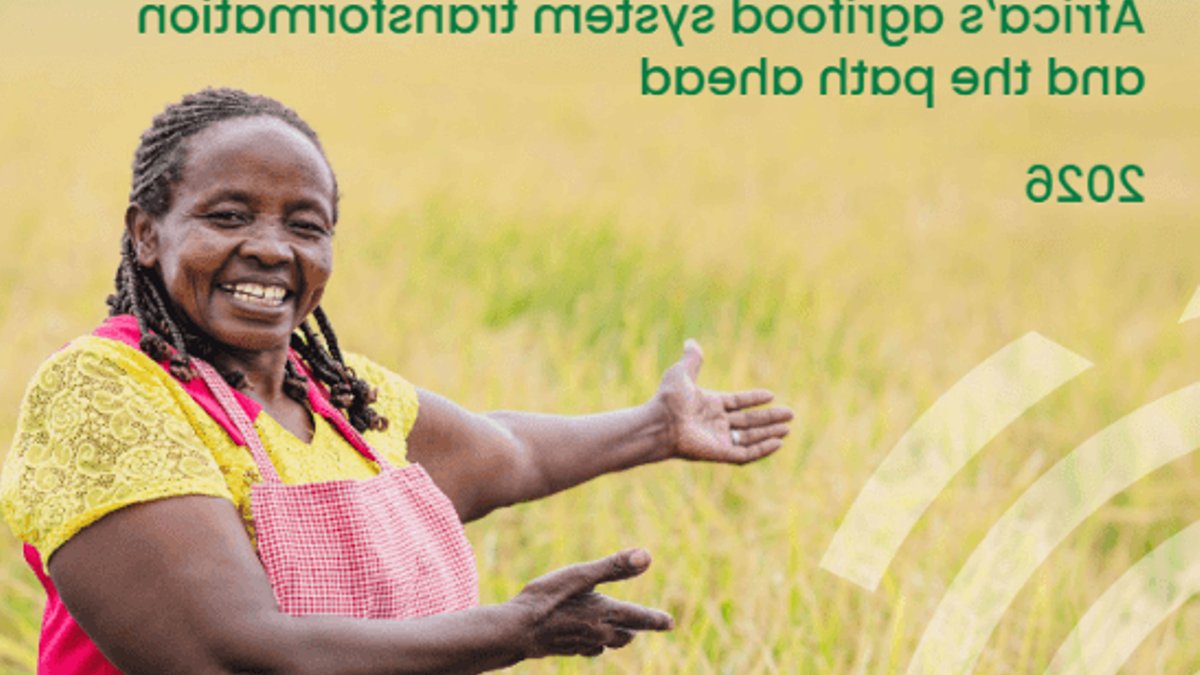
Africa’s agricultural output has roughly doubled in real terms over the past 20 years, but a persistent financing gap threatens the continent’s next phase of growth, according to a new 20-year assessment released by AGRA.
The report, released in Nairobi on August 31, shows that while production numbers look promising, they have not translated into widespread farmer prosperity. According to AGRA, cereal yields have increased by about 40% and agriculture’s Gross Value Added growth rose from roughly 2.3% to nearly 4% over the last two decades.
Despite these gains, significant structural issues remain. The report notes that agricultural gross value added per worker in Africa is approximately $1,500, compared with a global average of around $4,300. Average maize yields are around 1.6 tonnes per hectare in Africa, compared with approximately 4 tonnes per hectare globally. Irrigation also remains a major constraint, with only about 3% of cropland in sub-Saharan Africa irrigated compared to roughly 40% in Asia.
This disconnect between how much is produced and how much farmers earn is the core of the report’s argument. The assessment warns that Africa remains off track to meet the agricultural transformation ambitions associated with the Kampala Declaration and the third phase of the Full Africa Agriculture Development Programme, or CAADP.
Related: Travelstart Wins Africa’s Leading Online Travel Agency 2026
Capital and Climate Pressures
AGRA estimates an annual financing gap of around $180 billion across Africa’s agrifood sector, including approximately $65 billion for small and medium-sized agribusinesses. The scale of that gap illustrates why the next stage of development will require more than just increasing production at the farm level.
The investment challenge is becoming more urgent as environmental pressure increases. AGRA estimates that around 65% of Africa’s productive land is degraded, while desertification threatens approximately 45% of the continent’s total land area. Climate volatility creates additional risks for farmers and agricultural businesses, particularly in areas dependent on rain-fed agriculture.
For investors, resilience is increasingly an economic consideration rather than solely an environmental one. Agricultural businesses exposed to drought, unpredictable rainfall, or deteriorating soils face greater supply and pricing risks across the value chain. The report argues that addressing one problem without the others—such as building processing capacity without reliable agricultural production—will not be sufficient.
AGRA identifies three interconnected constraints that it describes as the productivity trap, value trap, and capability trap. The productivity trap refers to agricultural output that remains too low, variable, or vulnerable to climate shocks. The value trap emerges when higher production does not translate into stronger farmer incomes, viable businesses, or processing capacity. The capability trap concerns the institutions, finance, policies, data, skills, and accountability mechanisms needed to turn strategies into sustained results.
Related: When financial access grows faster than knowledge
That gap between farm gate and market creates a difficult reality for the people who grow food. When a harvest is plentiful but prices are low or storage facilities are lacking, the farmer does not see the benefit of the increased output. They face the risk of spoilage and price crashes rather than the stability required to invest in better tools or land. This means that for the average household relying on agriculture, the doubling of national output does not always mean a doubling of daily food security or income stability.
The report also makes a broader economic argument: African agriculture needs to be viewed as an investable industry rather than primarily as a development challenge. The estimated $180 billion annual financing gap highlights the potential scale of opportunities for commercial banks, development finance institutions, private equity, impact investors, insurers, fintech companies, and other sources of capital.
From Production to Profit
Small and medium-sized agribusinesses are particularly important because they often connect smallholder farmers to larger commercial markets. These companies operate across areas including seed distribution, agricultural inputs, mechanisation, food processing, logistics, storage, digital agriculture, and market aggregation.
AGRA President Alice Ruhweza said the next task is to translate progress into income, resilience, dignity, and opportunity for farmers through closer collaboration between governments, farmers, businesses, finance providers, researchers, and development partners.
Related: Nigeria leads Africa in new oil project approvals
AGRA presents its own role as one component of a much broader transformation involving African governments, farmers, researchers, businesses, financiers, and development organisations. Over the past two decades, AGRA and its partners say they have supported 118 seed companies and more than 650 improved seed varieties. They have also helped develop networks of more than 25,000 agro-dealers and 33,000 community extensionists, trained around five million farmers in soil-health and climate-smart agricultural practices, and worked with nearly 800 scientists.
AGRA says its work has also helped leverage approximately $691 million for national agricultural investment plans. The organisation stresses that these results should be understood as contributions to a much larger continental effort rather than evidence that any single institution is responsible for Africa’s agricultural progress.
The report comes as policymakers, investors, businesses, and agricultural organisations gather in Rwanda for the Africa Food Systems Forum 2026, taking place at the Kigali Convention Centre from September 1 to 4. This year’s theme — “Investing in Africa’s Agri-Food Systems: Nourishing Nations, Growing Jobs, Building Resilience” — puts financing and commercial development at the centre of the discussion. The forum is expected to bring together more than 5,000 participants from over 50 countries, with investment and finance, food security, climate resilience, youth and digital innovation, and trade and value chains among its principal themes.


